
等着我
Communities can't recycle or trash disposable e-cigarettes. So what happens to them?_我的网站

A |
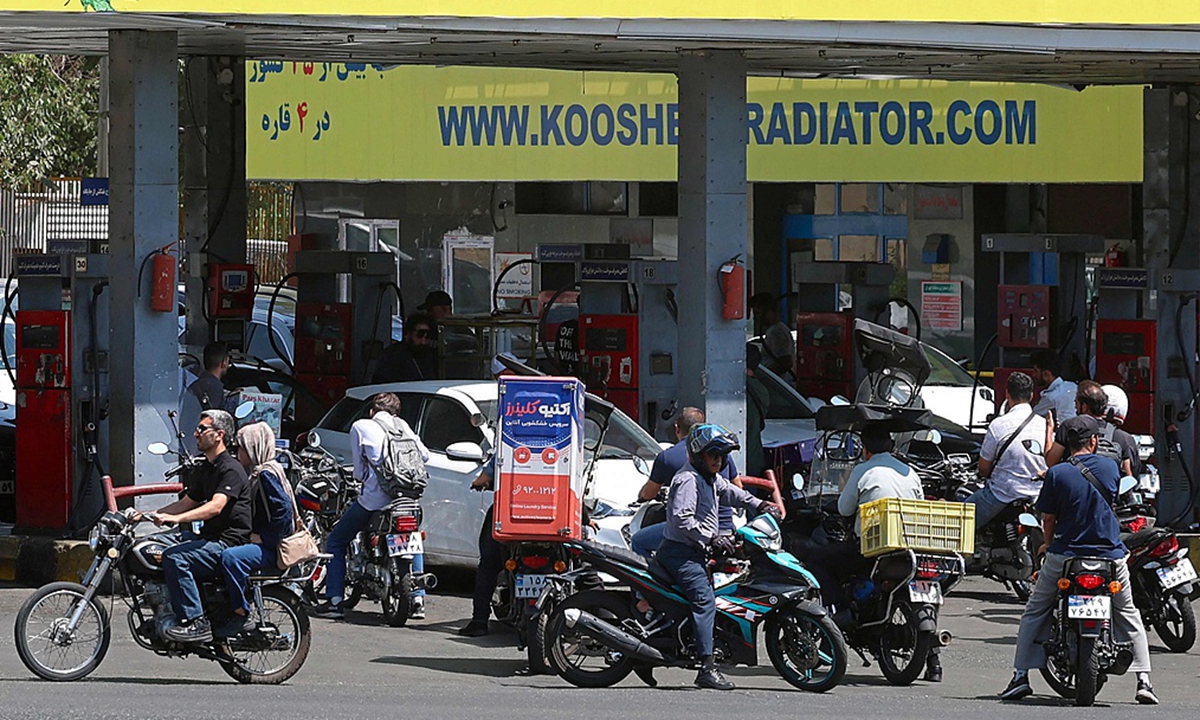
As military strikes and diplomatic negotiations have both failed to bring an early end to the roughly six‑month‑old US-Iran conflict, Washington rolled out new sanctions against Tehran on Monday local time intended to further strangle its economy. Iran, for its part, has vowed a tougher pushback.
In a news conference on Monday, Treasury Secretary Scott Bessent threatened new sanctions on countries refusing to cut economic ties with Iran, following recent rhetoric from Washington threatening an "economic D-Day" for Iran.
Meanwhile, the Office of Foreign Assets Control (OFAC) under the US Treasury announced secondary sanctions on nearly 60 entities, individuals, and vessels in multiple jurisdictions which, according to the US' claims, enable Iran's activities, including so-called nuclear and missile technology procurement, cyber operations, and oil-revenue generation networks.
According to Reuters, those sanctions targeted businesses in China, the UAE, Singapore and several other countries, including a cooking-oil refinery in France, but did not include any of the Chinese financial institutions suspected of facilitating Iran's oil trade.
In response to US Treasury Secretary Scott Bessent laying out plans for economic asphyxiation of Iran, expanding Washington's secondary sanction threats and warning of dire consequences for countries that do not join the campaign, Chinese Foreign Ministry spokesperson Lin Jian said at a press briefing on Tuesday that China has made clear on many occasions its firm opposition to illicit unilateral sanctions that have no basis in international law or the authorization of the UN Security Council.
"Economic warfare and maximum pressure provide no solution. On the contrary, they only serve to fuel tensions and lead to risk spillover, which will disrupt the global economic and financial order, and harm the legitimate rights and interests of other countries," the spokesperson said.
The pressing task is to facilitate the deescalation of the situation and return to dialogue and negotiation as soon as possible, Lin said, adding that China will do everything necessary to firmly safeguard its rights and interests, Lin added. Lin also said China's cooperation with Iran is conducted within the framework of international law, thus should not be disrupted.
When asked whether China has received any such timeline, as the US stated it would give countries a timeline on when to shut down the actions that it has identified, and how China intends to respond to the relevant announcements by the US Treasury involving China-based entities and individuals, Chinese Foreign Ministry spokesperson Lin Jian stated on Tuesday that China is closely following the developments, and will do everything necessary to firmly safeguard our rights and interests.
In May this year, China's Ministry of Commerce issued a blocking ban prohibiting any recognition, enforcement or compliance with US sanctions imposed on five Chinese companies on the grounds of their alleged involvement in Iranian petroleum transactions.
Relying on its financial hegemony and long‑arm jurisdiction, the US enforces unilateral sanctions with no basis in international law. Such measures severely undermine fundamental consensus for international trade and erode the existing international order, Zhou Mi, senior research fellow at the Chinese Academy of International Trade and Economic Cooperation, told the Global Times on Tuesday.
In essence, Washington is imposing its Iran‑focused policies to enterprises across the globe, compelling third‑party actors to fall in line with its diplomatic objectives, Zhou noted.
The latest sanctions would affect a broader range of countries, industries and firms. They will not only draw wider opposition from the international community, but also boomerang on the interests of US‑owned enterprises, he added.
Fewer levers left
"We are launching an economic onslaught against Iran's financial connections around the globe," Bessent claimed at a press conference. "Our objective is to sever every economic lifeline" that sustains the country, he said, according to a Treasury release.
The US Treasury Department said in a release that the new sectoral sanctions determinations target five critical sectors - digital assets, technology, gold, aviation and shipping - that the US claimed Iran has relied on to support its economy.
US Treasury claimed that "any entity that facilitates money laundering or sanctions evasion on behalf of Iran risks being cut off from the US financial system."
OFAC also suspended several general licenses that previously authorized certain remittance payments to Iran and Iranian access to the US cultural and academic system. The office also issued additional guidance on the so-called sanctions risks of bowing to Iranian demands related to shipping in the Strait of Hormuz.
Mohammad Mokhber, an aide to Supreme Leader Mojtaba Khamenei, said in an X post on Monday that Iran's response to US sanctions and pressure will be "more decisive than before."
Iranian Economy Minister Ali Madanizadeh said that Tehran "is and was ready," with a two-year plan to counter Washington's new sanctions. He told state television that "it seems they wished to suffer yet another defeat," per an AFP report.
Iranian Parliament Speaker Mohammad Bagher Ghalibaf responded in an X post that "the Americans know no one will believe their nonsense," noting that the US is not in a position economically to restrict its relations with other countries.
Alan Eyre, a distinguished diplomatic fellow at the Middle East Institute, told NBC News that after six months of combat, the US government "has few remaining levers it can use to convince Iran's major trading partners to materially reduce their economic ties."
While Washington's maximum‑pressure campaign may deliver short‑term shocks to Iran's economy, it can hardly "strangle" the country completely, said Liu Zhongmin, a professor at the Middle East Studies Institute of Shanghai International Studies University.
He added that Iran's economic resilience cannot be underestimated. Having borne decades of crippling sanctions from the US and Western nations, Tehran has built substantial experience in sanction‑busting and developed coping mechanisms ranging from basic‑industry self‑reliance and regional trade networks to oil‑for‑goods swaps and non‑US dollar‑denominated trade. Furthermore, the Strait of Hormuz remains a source of strategic leverage for Iran to push back against US pressure.
The expert said that Tehran and Washington are encountering "a battle of wills," and Iran believes the economic costs the US would suffer from a Hormuz blockade would outweigh the damage inflicted on Iran by sanctions.
Washington's "economic strangulation" policy risks ending in failure unless it yields short‑term outcomes, particularly securing the opening of the Strait of Hormuz, Liu added.
Self-created dilemma
As the US ramps up pressure on Iran, Americans are growing averse to a protracted war.
According to a Reuters/Ipsos poll that closed on Monday, US public approval of the war with Iran fell to its lowest level since the conflict's early days, with just 31 percent of Americans supporting US military action.
On June 18, the US and Iran signed an MoU, under which the two were scheduled to hold negotiations within a period of 60 days, which ended on August 17, to reach a final agreement. However, the talks' fate remains unclear following renewed escalation between the two countries.
Iranian political analyst Mostafa Khoshcheschm told Al Jazeera that the new US sanctions intended to create an "economic onslaught" were a "political show" of intimidation.
Liu said that by resorting to an "economic strangulation" tactic after miring itself in a fruitless military quagmire over Iran, the US has laid bare its practical predicament and strategic dilemma, and seemingly running out of cards.
Citing sources, CNN reported earlier this month that the US military has exhausted nearly 80 percent of its interceptors for a key missile defense system as senior US military commanders are warning that the Pentagon's munitions stockpile is "dangerously low."
Faced with depleted ammunition stockpiles and insufficient military‑industrial capacity, and amid growing domestic criticism of its Middle East policy, the White House has opted for tough economic measures against Iran, Liu said. "Less costly than military coercion, such moves help Washington strike a tough posture before voters and shun political risks from further military escalation," said the expert.
There is, however, an increasingly obvious paradox in Washington's economic warfare against Iran: the tighter the sanctions, the tighter global energy supplies become, and the higher costs borne by American consumers and businesses, the expert added.
。 WASHINGTON -- With the growing popularity of disposable e-cigarettes, communities across the U.S. are confronting a new vaping problem: how to safely get rid of millions of small, battery-powered devices that are considered hazardous waste.For years, the debate surrounding vaping largely centered on its risks for high school and middle school students enticed by flavors like gummy bear, lemonade and watermelon.But the recent shift toward e-cigarettes that can’t be refilled has created a new environmental dilemma. The devices, which contain nicotine, lithium and other metals, cannot be reused or recycled. Under federal environmental law, they also aren’t supposed to go in the trash.U.S. teens and adults are buying roughly 12 million disposable vapes per month. With little federal guidance, local officials are finding their own ways to dispose of e-cigarettes collected from schools, colleges, vape shops and other sites.“We are in a really weird regulatory place where there is no legal place to put these and yet we know, every year, tens of millions of disposables are thrown in the trash,” said Yogi Hale Hendlin, a health and environmental researcher at the University of California, San Francisco.In late August, sanitation workers in Monroe County, New York, packed more than 5,500 brightly colored e-cigarettes into 55-gallon steel drums for transport. Their destination? A giant, industrial waste incinerator in northern Arkansas, where they would be melted down.Sending 350 pounds of vapes across the country to be burned into ash may not sound environmentally friendly. But local officials say it’s the only way to keep the nicotine-filled devices out of sewers, waterways and landfills, where their lithium batteries can catch fire.“These are very insidious devices,” said Michael Garland, who directs the county’s environmental services. “They’re a fire risk and they’re certainly an environmental contaminant if not managed properly.”Elsewhere, the disposal process has become both costly and complicated. In New York City, for example, officials are seizing hundreds of thousands of banned vapes from local stores and spending about 85 cents each for disposal.HAZARDOUS WASTEVaping critics say the industry has skirted responsibility for the environmental impact of its products, while federal regulators have failed to force changes that could make vaping components easier to recycle or less wasteful.Among the possible changes: standards requiring that e-cigarettes be reusable or forcing manufacturers to fund collection and recycling programs. New York, California and several other states have so-called extended product responsibility laws for computers and other electronics. But those laws don't cover vaping products and there are no comparable federal requirements for any industry.Environmental Protection Agency rules for hazardous waste don’t apply to households, meaning it's legal for someone to throw e-cigarettes in the garbage at home. But most businesses, schools and government facilities are subject to EPA standards in how they handle harmful chemicals like nicotine, which the EPA considers an “acute hazardous waste," because it can be poisonous at high levels.In the U.S., the push to manage disposable e-cigarettes has chiefly come from schools, which can face stricter regulation if they generate more than a few pounds of hazardous waste per month. Monroe County schools pay $60 to dispose of each one-gallon container of vapes. More than two thirds of the e-cigarettes collected by the county come from schools.“Our schools were very relieved because they had confiscated so much of this material,” Garland said. “If you think of all the high schools across the country, they are in a very difficult place right now.”Lithium in e-cigarette batteries is the same highly sought metal used to power electric vehicles and cellphones. But the quantities used in vaping devices are too small to warrant salvage. And nearly all disposable e-cigarette batteries are soldered into the device, making it impractical to separate them for recycling.Disposable e-cigarettes currently account for about 53% of the multi-billion U.S. vaping market, according to U.S. government figures, more than doubling since 2020.Their rise is a study in unintended consequences.In early 2020, the Food and Drug Administration banned nearly all flavors from reusable e-cigarettes like Juul, the cartridge-based device blamed for sparking a nationwide surge in underage vaping. But the policy didn't apply to disposables, opening the door to thousands of new varieties of fruit and candy-flavored vapes, almost all manufactured in China.In recent months the FDA has begun trying to block imports of several leading disposable brands, including Elf Bar and Esco Bar. Regulators consider them all illegal, but they have been unable to stop their entry to the U.S. and the devices are now ubiquitous in convenience stores, gas stations and other shops. FDA’s tobacco chief, Brian King, said in a statement that his agency “will continue to carefully consider the potential environmental impacts” of vaping products.THE COST OF CONFISCATING DISPOSABLE E-CIGARETTESIn 2020, New York City outlawed the vast majority of e-cigarette types, banning flavors that can appeal to youngsters.City employees conduct thousands of inspections annually, and last year issued more than 2,400 citations to corner stores and bodegas selling illegal flavored products. Adding to the challenge are THC vapes sold at hundreds of unlicensed marijuana shops, a separate but related problem that has mushroomed since New York's legalization of recreational pot.Since last November, officials have seized more than 449,000 vape units, according to city figures. New York City is spending about $1,400 to destroy each container of 1,200 confiscated vapes, but many more remain in city storage lockers. “I don’t think anyone ever considered the volume of these in our community,” said New York Sheriff Anthony Miranda, who leads a task force on the issue. “There’s a tremendous amount of resources going into this effort.” A recent lawsuit against four large vaping distributors aims to recoup some of the city's costs. For now, New Yorkers who vape can bring their used e-cigarettes to city-sponsored waste-collection events.Ultimately those vapes meet a familiar fate: They are shipped to Gum Springs, Arkansas, to be incinerated by Veolia, an international waste management firm. The company has incinerated more than 1.6 million pounds of vaping waste in recent years, mostly unsold inventory or discontinued products.Veolia executives say burning e-cigarettes' lithium batteries can damage their incinerators.“Ideally we don’t want to incinerate them because it has to be done very, very slowly. But if have to, we will,” said Bob Cappadona, who leads the company’s environmental services division.Veolia also handles e-cigarettes from Boulder County, Colorado, one of the only U.S. jurisdictions that actively tries to recycle e-cigarette batteries and components.Historically, Boulder has had one of the highest teen vaping rates in the country, peaking at nearly 33% in 2017. “It was like someone flicked the switch. Suddenly e-cigarettes were everywhere,” said Daniel Ryan, principal of Centaurus High School. Beginning in 2019, county officials began distributing bins to schools for confiscated or discarded e-cigarettes. Last year, they collected 3,500. County staffers sort the devices by type, separating those with removable batteries for recycling. Disposables are packed and shipped to Veolia's incinerator. Shelly Fuller, who directs the program, says managing vape waste has gotten more costly and labor intensive with the shift to disposables.“I kind of miss the days when we had Juuls and I could take each battery out and recycle them very easily,” Fuller said. “No one has time to dismantle a thousand Esco Bars.”___AP video journalist Joseph Frederick contributed to this story from New York___Follow Matthew Perrone on Twitter: @AP_FDAwriter___The Associated Press Health and Science Department receives support from the Howard Hughes Medical Institute’s Science and Educational Media Group. The AP is solely responsible for all content.。
Current article:http://ikj6x.linlangdouwaqiexusan.bond/news/20260826_841.html
Published on:17:37:33
上一篇:进一步加强汛期水环境监管 下一篇:商业与自然共生 天目里打造“无废”商圈新范式
我的网站最新文章
- 特发信息:2026年半年度净利润6206.67万元,同比增长1007.52%
- 泉城骑行 温暖同行
- 水月雨推出 BanG Dream 手游联动定制耳机:8 月 27 日预售,599 元
- Zero-tariff policies, systemic support help African countries expand exports, upgrade industry
- 今年台风为何这么多?专家解读
- 严重“爆表”!一女子体内抽出“牛奶血”
- 国足1-0库拉索!韦世豪补时凌空破门 全程仅2次传球
- 中国 AI 为什么追得这么快?美媒找到一批关键人物
- 강원교육청·횡성군, 교육혁신선도지역 추진 업무협약
- 太空的第一座矿山,会挖什么,太空的第一座矿山,会挖什么
- 从10年到4.5年 “钱塘造”创新药 怎么把研发时间砍掉一半多?
- 霹雳舞如何从街头“跳”进奥运
- 机票退改新标准计划年内出台,中国航协正牵头制定
我的网站随机推荐
- 新疆青年企业家商会成立,新疆青年企业家商会成立
- Caracas Gets Creative in Bolstering Economy as Officials Look to Offer Shares of Banco de Venezuela
- 为避免球员工会抗议 联盟或对快船从轻处罚
- 50国发表反俄声明,美国未参与!中方最新发声:在乌克兰问题上的立场客观公正、一以贯之,敦促当事方推动局势降温
- WAIC2026 | 从参会企业招聘广告看具身智能企业人才饥渴
- 原创 珠穆朗玛峰明明只有一半在中国,为何全世界都认为是中国的?
- 150亿豪言彻底落空!顾祥悦掌舵第四年,今世缘利润跌回三年前
- Birkenstock goes public on New York Stock Exchange
- 不容易!国乒男单首轮终于赢球,2位小将立功,1/8决赛再迎生死战
- 9月13日0—24时,三亚市无新增确诊病例和无症状感染者
- 国乒的集团优势正在瓦解,暴露出的问题待解答
- 浙江启动海上防台风应急响应
- 【交小哇价格指数】2022年09月14日_行业_交通